Search This Blog
Sunday, March 27, 2022
Looking for Jane: a novel of women's fight for legal abortion in Canada
Saturday, September 11, 2021
Shield Maidens: not of Rohan but of real Viking bands
By Nancy Marie Brown
(author of Ivory Vikings, Song of the Vikings, The Far Traveler)
“The first Viking housewife with her keys appeared in a Swedish history book in the 1860s, replacing an earlier historical portrait of Viking women who were strikingly equal to Viking men. The Victorian version of Viking history has been presented ever since as truth but it is only one interpretation.”
If her three previous books on Vikings weren’t sufficient evidence, ‘Valkyries’ seals the deal: this author knows whereof she writes. The language and the history are assured, the detail illuminating. From the grave goods at Burka to the ruins of long-vanished trading ports, the deep-rooted history of Gunnhild Mother-of-Kings to the warrior-woman Hervor’s life constructed from snatches of song and saga, it’s part archaeological report, part history, part legend, part anti-patriarchal commentary, and altogether readable.
Like the old Norse sagas, this book slips easily between fact and fiction; unlike them, it tells you which is which. Keep in mind that the sagas were first written down by Christian monks after being retold & embroidered for possibly hundreds of years first. In at least one known instance those first copyists deliberately rejected the idea that a warrior might be female.
So when the most complete skeleton, with the largest collection of arms, out of over 500 excavated graves at Burka was identified as female by DNA testing, there was some pushback among academics whose whole career had been invested in ‘men = warriors, women = homemakers.’
This unknown female warrior was tall – 5’7 to the largest known king at 5’8 – and her grave goods wouldn’t shame any warrior king. Her two-edged sword & her long thin knife in its ornate sheath both came from the East Way (trading route), toward Byzantium, although it’s impossible to know if she traveled there herself or traded or killed someone who had acquired it. She had two horses, a bow & twenty-five metal-tipped arrows, an axe, two spears, and 2 shields. In short, she was buried with more arms than almost every other known Viking grave in the world.
Small wonder that our author named her Hervor, after the female warrior most often mentioned in the oldest (pre-Christian) sagas.
During Hervor’s lifetime, from about 930 to 970, the whole world of the Vikings changed due to the spreading presence of Christian missionaries. When she was born she was not unusual as a fighter, but by thirty or so years after her death, The Norse pantheon of gods had given way to the Christian monopoly and women had been firmly herded back to hearth and home. Patriarchy was the ruling social structure.
Only in the past 40 years or so has the supremacy of the Viking warrior as male been interrogated. This book makes a great stride toward bringing that knowledge out of dusty academia.
If academia isn’t your thing, here’s a pop-culture twist: If you are a Tolkien or LOTR fan, you will recognize many references in this Norse history as having been reinterpreted by that fantasy writer into Lord of the Rings. Mirkwood and the Vestfold are the first two that struck me. The Riders of Rohan have often been referred to as Vikings of the Grasslands, and King Theoden’s hall is likely based in part on the Shining Hall. After reading ‘The Real Valkyrie’ you may find yourself wondering if Aragorn was thinking of Hervor when he said to Eowyn, “You are the daughter of kings, a shield-maiden of Rohan. I do not think that will be your fate.”
It was not Hervor’s fate, either, to wither in a cage. She died a warrior’s death and was buried in a warrior’s grave with everything she would need to continue her glorious battles in the afterlife:
And hers is only one of the stories of warrior women within these pages. There are tales and histories enough to fire the fighting spirit of any modern woman who reads it, and to give pause to any man who previously assumed all Viking warriors were male.
There’s an excerpt from the book available at
https://crimereads.com/viking-women-real-valkyrie/
- Publisher : St. Martin's Press (Aug. 31 2021)
- Language : English
- Hardcover : 336 pages
- ISBN-10 : 1250200849
- ISBN-13 : 978-1250200846
#TheRealValkyrie #NetGalley #Vikings #WarriorWomen #sword #axe #bow #Iceland #Denmark #DanishHistory #history #VikingHistory #barrow #saga #skald #Hervor #longship #nonfiction #amreading #amreviewing #ILoveBooks #Bookstagram #LOTR #Eowyn #shieldmaiden
Sunday, June 6, 2021
The End of Men by Christina Sweeney-Baird
This novel would be a chilling read in any year but during the COVID pandemic it’s both a terrifying worst-case and a relief that we – human civilization – dodged even greater disaster. It’s a horrifying tale while not a horror story.
Reminiscent of WORLD WAR Z (the book, not the movie)in style, the story unfolds through flashbacks, emails, snippets from blogs, accounts of meetings, with only a few real-time narrators throughout. The last group are rendered in understated prose that conveys psychological trauma response better than more graphic descriptions or reactions might. This separation of time& distance makes for a less emotionally fraught view of the many horrors but allows for a broader worldview, geographically centered in the UK with glimpses into US and Asian-Pacific government and societal reactions.
A striking feature of this book is the centrality of female perspectives, politics, and coping mechanisms. As the men in positions of power and authority start to drop like flies or go into isolation to try to protect themselves from near-certain death, women adapt, reorganize, step in and step up to keep society functioning. The absence of the male-model single heroic figure beloved of movie directors (the Brad Pitt, in WWZ) and too many novels is stark. Success comes from a small number of women going beyond duty or personal responsibility, but also from the tireless work of thousands in research labs and bureaucracies, of millions of ordinary women running their towns and villages.
The male characters – all but one seen through the eyes of women who work for them, love them, or despise them - are a varied lot,some good, some bad, many mediocre, but all recognizable to most female readers.The women characters are only a bit more thoroughly sketched in. Apart from Catherine, the Plague’s almost accidental recording angel, we don’t get deeply or long into their minds or hearts, and on the whole there’s no need to. Women readers can easily fill in the emotional and psychological underpinnings. As with the men, we’ve all met and worked with and been related to those women, met them at the school gate. We’ve loved and hated them, envied their seemingly perfect lives or been thankful our life, our financial footing, our relationship, is stronger.
While there are valid critiques about the lack of depth regarding LGBTQ2S+ characters and the various regions’ political and militaristic responses, both get mentioned and in ways that admit to the complexity of their specific situations. To add more in those areas would be to distance readers further from the central threat to humanity’s survival, and the mechanisms by which the restructured, women-led states tackle the resulting sex imbalance to preserve the genetic diversity of our own species.
Those mechanisms are not the stuff of hearts-and-flowers,sisters-together anti-male Eutopias some male readers might anticipate. They’re practical and often ruthlessly implemented. Not all women agree. Not all women program heads are approachable or warm. A woman in this fictional universe can be brilliant and ambitious and personally unlikeable and still win accolades, like men can in the real world.While there’s more than enough loss to go around, the book ends on a series of small hopeful notes as characters who have survived the unthinkable gradually let their grief settle and move forward.
If the tale unfolded like WORLD WAR Z (the book), it ends like CHILDREN OF MEN (the movie), with new life, new relationships, raising children in a world unlike anything humanity has ever experienced before.
#Netgalley #EndOfMen
Publisher
:
Doubleday Canada (April 27 2021)
- Paperback : 416 pages
- ISBN-10 : 0385696639
- ISBN-13 : 978-0385696630
Friday, November 9, 2018
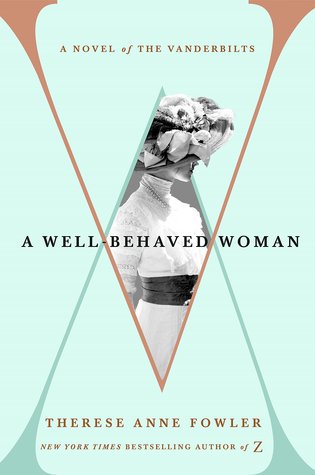
Review: 'A Well-Behaved Woman' by Therese Ann Fowler
400 pages
This masterfully crafted biographical novel takes us credibly into the mind and heart of a Gilded Age matron more often reviled than praised..
A Well-Behaved Woman follows Alva Vanderbilt Belmont from her own family's downfall through her unhappy marriage to Willie K. Vanderbilt and on to her years at the forefront of America's women's rights movement. It's a long journey, made faster by judicious leaps over years where not much was changing - or not much that she knew of at the time it was happening. While much of Vanderbilt history is generally known from the obsessive tabloid coverage of the late 1800s, and more from the many biographies written since about various family members, Alva was primarily known for her apparently cruel interactions with her daughter, Consuelo.
For decades, all anyone knew of Alva herself was what appeared on the outer side of this intensely private woman: that she was a Southern belle by upbringing, that she was intensely competitive with her sister-in-law, Alice Vanderbilt,' in the matter of houses, that she forced a fragile Consuelo to marry England's most eligible duke despite the girl's pleas, tears, and refusals, that she scandalously instituted a divorce from Willie K. over his near-constant adulteries, and - almost unheard of at the time - came out of it a wealthy woman in her own right.
This author takes us into the inner layers, credibly revealing a young Alva desperate to recoup her family's fortunes by a good marriage before she and her sisters are left homeless by the death of their near-destitute father. How that early insecurity fed her societal obsession is a recurring theme. Along the way there are glimpses into the constriction of young Society women's lives, from what they wore at each time of day or season through the types of charitable works that were considered suitably genteel to the kind of instruction (or lack of it) they were given about their expected role in the marital bed. While a few infelicitous deeds of Alva's are glossed over or set hastily aside without much effort to excuse or explain, overall the author succeeds in humanizing a woman long seen through a less compassionate lens, and adds convincing psychological underpinnings to the documented rapprochement between Alva and Consuelo following the ill-fated ducal marriage.
If you like watching The Buccaneers or reading about America's Gilded Age, or following women faced with challenging choices and limited acceptable tools with which to extricate themselves, this book may well engage you as deeply as it did me.
Further reading