

We all know of John McCrae, who wrote that most iconic
Canadian poem still recited in schools and now sung at Remembrance services
nearly a hundred years later. But how many remember the many other trench
poets, from Canada and other nations, who recorded the brutal truth of war with
words of power and beauty that, when widely read by the non-combatant public
far from the Western Front, helped force an end to firing squads as the
punishment for shell shock, and may have hastened the end of the war?
Their leaders were unquestionably Siegfried Sassoon and Wilfred Owen. The latter was killed before he could see what change his words had wrought in his society, but his work is taught in first-year English classes every fall across this country and continues, nearly a hundred years after his death, to influence discussions of war and human conflict.
Their leaders were unquestionably Siegfried Sassoon and Wilfred Owen. The latter was killed before he could see what change his words had wrought in his society, but his work is taught in first-year English classes every fall across this country and continues, nearly a hundred years after his death, to influence discussions of war and human conflict.
In longer works, there are many general novels that touch on the war in some aspects. One in particular shows the changing public attitude to war. Lucy
Maud Montgomery wrote the last of her ‘Anne of Green Gables’ books during and
immediately after WW1, about Anne’s children growing to adulthood during those
years of patriotism, gritty reality, and overwhelming losses. Rilla of Ingleside was published in full in 1921 and considered a realist account by
those who had lived through the war years in Eastern
Canada.
When it was republished a few decades later, five percent of the book - mostly dealing with the first world war as it was experienced in rural PEI families- was edited out to make it more suitable for a new generation of young female readers, who were assumed not to be interested. Fifty years later, fashion having changed again, Rilla was republished in its original form, and helped a new generation, mostly of young girls, see those parts of Canada’s history as more than bare words on the pages of a history textbook.
When it was republished a few decades later, five percent of the book - mostly dealing with the first world war as it was experienced in rural PEI families- was edited out to make it more suitable for a new generation of young female readers, who were assumed not to be interested. Fifty years later, fashion having changed again, Rilla was republished in its original form, and helped a new generation, mostly of young girls, see those parts of Canada’s history as more than bare words on the pages of a history textbook.
Literature, including popular fiction, helps both those
connected to war and those removed from it to understand and process its pain.
It breathes life onto the pages of history.
Crime writers who have integrated wars and their effects include
Dorothy L. Sayers gave her sleuth, Lord Peter Wimsey, a recognizable and compelling case of what we now call Post-Combat Stress Disorder, but during and after World War One was known as shell shock.
Dorothy L. Sayers gave her sleuth, Lord Peter Wimsey, a recognizable and compelling case of what we now call Post-Combat Stress Disorder, but during and after World War One was known as shell shock.
Helen McInnes, whose post-war thrillers included hunts for
Nazi-looted treasures, and even for Nazis, had a closer connection to World War 2. Her third novel, Assignment in Brittany (1942), was required reading for Allied intelligence agents who were being sent to work with the French resistance.
 Enid Blyton, whose Adventure children stumbled into a cache
of religious and cultural treasures in The Valley of Adventure, introduced generations of children to Nazi art looting and the lingering effects of that war in Europe.
Enid Blyton, whose Adventure children stumbled into a cache
of religious and cultural treasures in The Valley of Adventure, introduced generations of children to Nazi art looting and the lingering effects of that war in Europe.
Andrew Martin, whose Jim Stringer novel, The Somme Station,
takes us into the heart of a WW1 battlefield.
James R. Benn, whose Billy Boyle is a brash young Boston cop brought to Europe
by his uncle Ike (yes, that Ike) to be a special investigator in theatres of
war, looking into crimes too sensitive for local police forces, introduces mystery readers around the world to the command and complications of the American Army in WW2.
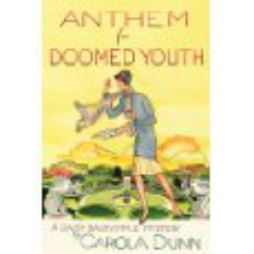 Carola Dunn's 1920s sleuth, Daisy Dalrymple, traces a connection between the Great War and the bodies found in a shallow grave in Epping Forest, in Anthem for Doomed Youth, whose title is taken from the famous poem by Wilfred Owen, the World War One trench poet.
These are only a few of the many crime novels of the past century that deal with some aspect of some war. Every one brings war and its effects to life for readers of every age and interest level. While none of those listed here deal with the ongoing Iraq or Afghanistan wars, or other current conflicts around the globe, I'm sure they're out there. You'll find them if you look.
Crosses photo credit to Neil Zeller Photography, Calgary


